Course overview
Construction Law for Project Success is for construction and project management teams who need a grounding in the legal and contractual issues they encounter on New Zealand projects. It focuses on the decisions made during delivery, including how to respond to delays, changes and payment issues.
The course introduces the principles behind claims, contractual entitlement and commercial risk. It considers the information needed to assess an issue, the records that support a position and when to seek further advice.
Participants work through examples involving delay, variations and disputed payment. They discuss which contractual or legal questions need to be addressed and what information they would gather before deciding how to respond.
What the course covers
The day concentrates on recognising contractual issues, following the required procedures and knowing when specialist advice is needed. More complex legal topics are introduced through examples; this is not detailed legal training in each subject.
Topics include:
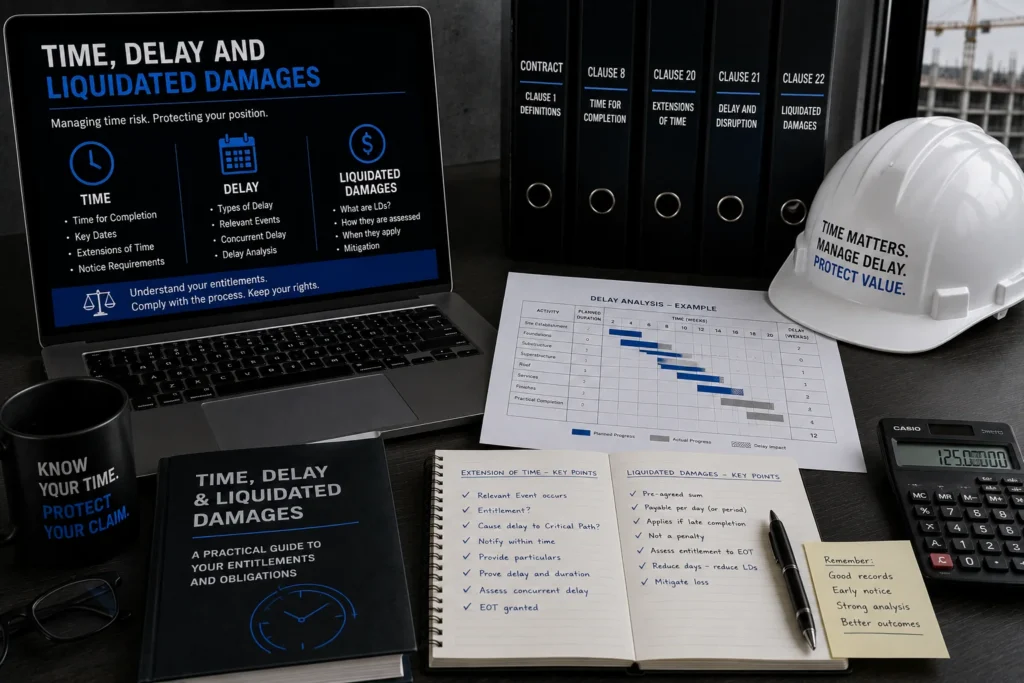
Time, delay and programme
- Extensions of time and disruption claims
- Time bars and condition precedent clauses
- Time ‘at large’ and the prevention principle
- Concurrent delay
- Programme management and contractual time obligations
Payment, changes and recovery
- Contractual and equitable set-off
- Payment disputes and commercial remedies
- Variations, pricing and entitlement
- Fluctuations and cost recovery
- Extra-contractual recoveries in contract and common law
Responsibilities and commercial risk
- The doctrine of pure economic loss
- Good faith and the obligations of the Contract Administrator
- How risk allocation affects project decisions
- Applying the contract to day-to-day project decisions
Course delivery
This is a one-day public course, delivered face-to-face by Raine Selles in New Zealand.
It is an entry-level course for construction and project management teams developing their understanding of construction law. Legal terms are introduced through project examples.
Contact Raine for upcoming dates, venue details, availability and booking information.
Who it’s for
The course is for construction and project management teams involved in day-to-day project delivery, including:
- Construction Managers and Project Managers
- Contract Administrators and Commercial Managers
- Site Managers and Supervisors
- Contractors and Subcontractors
- Client-side Delivery Teams
- Consultants and Advisors